
Is Your GUT Controlling Your Mood?
Optimizing your Second Brain
Our gut health significantly impacts our brain, as certain substances can harm beneficial gut bacteria, leading to issues like brain fog and bloating. This video introduces the concept of the gut brain axis and warns about the dangers of disrupting gut microbiome balance. Understanding your digestive system is crucial for maintaining good mental health and optimizing your second brain.
In this episode, I take a deep dive into the intricate communication network between your gut and your brain. You'll learn how your gut microbiota influences everything from anxiety and fatigue to your risk of neurodegenerative diseases like Alzheimer's and Parkinson's. We'll explore the three main pathways of the gut-brain connection, the dangers of an unbalanced microbiome (dysbiosis), and most importantly, powerful, evidence-based natural strategies to support this vital system. Learn which foods, lifestyle changes, and specific herbal medicines can nurture your gut, and uncover a critical warning about common "natural" antimicrobials that could be doing more harm than good. If you've ever had a "gut feeling" or felt the physical effects of stress in your stomach, this episode will reveal the profound biological truth behind it.
link to video here: Is Your Gut Controlling Your Mood Video
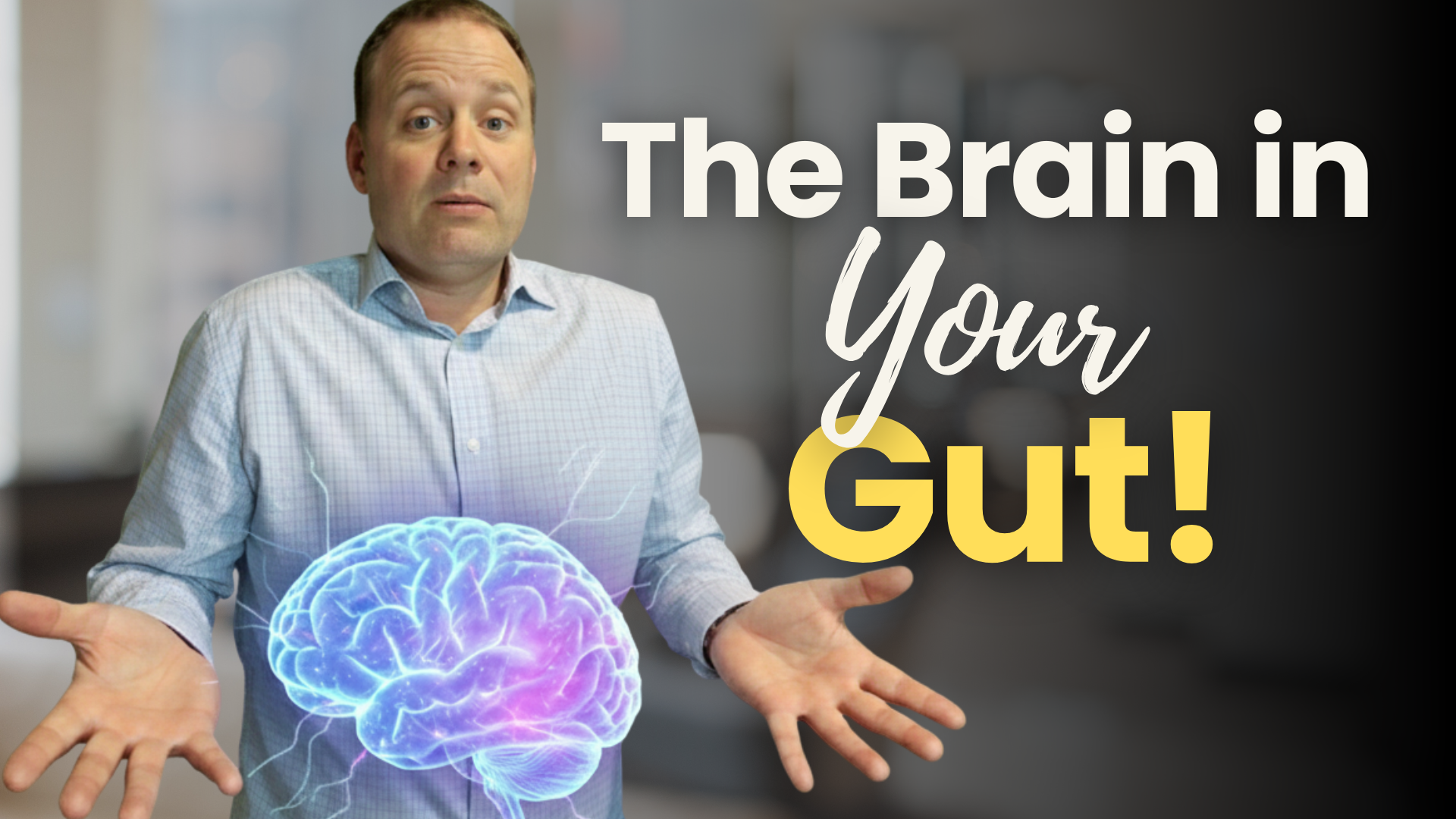
Click the image to go to v
References:
Andronie-Cioara, F. L., Ardelean, A. I., Nistor-Cseppento, C. D., Jurcau, A., Jurcau, M. C., Pascalau, N., & Marcu, F. (2023). Molecular mechanisms of neuroinflammation in aging and Alzheimer’s disease progression. International Journal of Molecular Sciences, 24(3), 1869. https://doi.org/10.3390/ijms24031869
Appleton, J. (2018). The gut–brain axis: Influence of microbiota on mood and mental health. Integrative Medicine (Encinitas), 17(4), 28–32. https://pmc.ncbi.nlm.nih.gov/articles/PMC6469458/
Bakkiyaraj, D., Nandhini, J. R., Malathy, B., & Pandian, S. K. (2013). The anti-biofilm potential of pomegranate (Punica granatum L.) extract against human bacterial and fungal pathogens. Biofouling, 29(8), 929–937. https://doi.org/10.1080/08927014.2013.820825
Blinkouskaya, Y., Caçoilo, A., Gollamudi, T., Jalalian, S., & Weickenmeier, J. (2021). Brain aging mechanisms with mechanical manifestations. Mechanisms of Ageing and Development, 200, 111575. https://doi.org/10.1016/j.mad.2021.111575
Carabotti, M., Scirocco, A., Maselli, M. A., & Severi, C. (2015). The gut–brain axis: Interactions between enteric microbiota, central and enteric nervous systems. Annals of Gastroenterology, 28(2), 203–209. https://pmc.ncbi.nlm.nih.gov/articles/PMC4367209/
Di Benedetto, S., & Müller, L. (2019). Aging, immunity, and neuroinflammation: The modulatory potential of nutrition. In M. Mahmoudi & N. Rezaei (Eds.), Nutrition and immunity. Springer. https://doi.org/10.1007/978-3-030-16073-9_14
Di Benedetto, S., Müller, L., Wenger, E., Düzel, S., & Pawelec, G. (2017). Contribution of neuroinflammation and immunity to brain aging and the mitigating effects of physical and cognitive interventions. Neuroscience & Biobehavioral Reviews, 75, 114–128. https://doi.org/10.1016/j.neubiorev.2017.01.044
Gaspar-Silva, F., Trigo, D., & Magalhães, J. (2023). Ageing in the brain: Mechanisms and rejuvenating strategies. Cellular and Molecular Life Sciences, 80(7), 190. https://doi.org/10.1007/s00018-023-04832-6
Hawrelak, J. A., Cattley, T., & Myers, S. P. (2009). Essential oils in the treatment of intestinal dysbiosis: A preliminary in vitro study. Alternative Medicine Review, 14(4), 380–384. https://pubmed.ncbi.nlm.nih.gov/20030464/
Jin, R., Chan, A. K. Y., Wu, J., & Lee, T. M. C. (2022). Relationships between inflammation and age-related neurocognitive changes. International Journal of Molecular Sciences, 23(20), 12573. https://doi.org/10.3390/ijms232012573
Jurcau, M. C., Jurcau, A., Cristian, A., Hogea, V. O., Diaconu, R. G., & Nunkoo, V. S. (2024). Inflammaging and brain aging. International Journal of Molecular Sciences, 25(19), 10535. https://doi.org/10.3390/ijms251910535
Salim, A., Deiana, P., Fancello, F., Molinu, M. G., Santona, M., & Zara, S. (2023). Antimicrobial and antibiofilm activities of pomegranate peel phenolic compounds: Varietal screening through a multivariate approach. Journal of Bioresources and Bioproducts, 8(2), 146–161. https://doi.org/10.1016/j.jobab.2023.01.006
Savulescu-Fiedler, I., Benea, S.-N., Căruntu, C., Nancoff, A.-S., Homentcovschi, C., & Bucurica, S. (2025). Rewiring the brain through the gut: Insights into microbiota–nervous system interactions. Current Issues in Molecular Biology, 47(7), 489. https://doi.org/10.3390/cimb47070489
Xu, J., Chen, H. B., & Li, S. L. (2017). Understanding the molecular mechanisms of the interplay between herbal medicines and gut microbiota. Medicinal Research Reviews, 37(5), 1140–1185. https://doi.org/10.1002/med.21431